Organic & Conventional Ingredients | Exporting Worldwide

Rice Protein 70% Feed Grade Supplier in India | Nectafresh

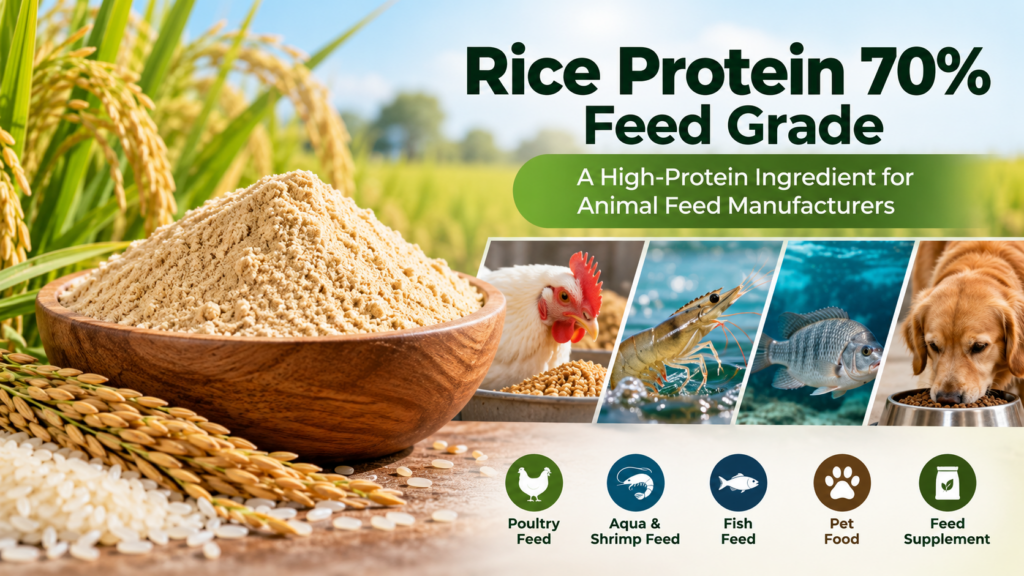
Rice Protein 70% Feed Grade for animal feed manufacturing

Rice Protein 70% Feed Grade is a protein-rich, rice-based feed ingredient used by animal feed manufacturers to support protein enrichment and feed formulation. With a protein content of 70% or above, this ingredient can be considered by manufacturers looking to incorporate rice-derived protein into different feed products according to their nutritional targets, formulation requirements and quality specifications.

Nectafresh Agro Foods offers rice-based food and feed ingredients for industrial buyers. For feed manufacturers, procurement managers and feed supplement manufacturers, selecting the right ingredient involves evaluating protein content, nutritional composition, consistency, suitability for the intended application and reliable bulk sourcing.

In India, demand for protein-rich feed ingredients creates opportunities for manufacturers and suppliers serving regional feed industries, including Telangana, Andhra Pradesh, Tamil Nadu, Kerala, Maharashtra, West Bengal and Chhattisgarh.

What Is Rice Protein 70% Feed Grade?

Rice Protein 70% Feed Grade is a rice-derived ingredient containing 70% or more protein, according to the applicable product specification and testing method. It is intended for feed-related applications rather than direct human consumption.

Feed manufacturers may consider this ingredient when developing formulations that require additional protein from a rice-based source. The quantity incorporated depends on the desired nutritional composition, the other ingredients in the formulation and the requirements of the target animal species.

For industrial buyers, it is important to review the product’s technical data sheet before procurement. Protein content alone does not determine an ingredient’s overall nutritional value or suitability for every feed application.

Key Applications of Rice Protein Meal in Animal Feed

Rice Protein Meal and Rice Protein for Feed are among the terms buyers may use when searching for rice-derived protein ingredients. Actual product identity and specifications should always be confirmed with the supplier.

1. Protein Enrichment in Animal Feed

Feed manufacturers may incorporate protein-rich ingredients to help achieve the target protein level of a formulated feed. Rice Protein 70% Feed Grade can be evaluated as part of this process, depending on its nutritional profile and compatibility with the existing formulation.

The inclusion rate should be determined by a qualified animal nutritionist or feed formulator based on the complete nutritional requirements of the feed.

2. Poultry Feed Formulations

Poultry feed manufacturers require carefully balanced formulations that meet the nutritional requirements of different bird categories and growth stages.

Rice Protein for Poultry Feed is a relevant search term for buyers exploring rice-derived protein ingredients. Before incorporating the product into poultry feed, manufacturers should assess its amino acid profile, digestibility, nutrient availability and suitability for the intended formulation.

3. Aqua Feed and Shrimp Feed

Aqua feed manufacturers formulate feeds according to the nutritional requirements of the target aquatic species. Shrimp and fish feed formulations may require particular attention to protein quality, amino acid balance, digestibility and palatability.

Buyers searching for Rice Protein for Aqua Feed, Rice Protein for Shrimp Feed or Rice Protein for Fish Feed should evaluate the ingredient’s technical specifications and suitability for the specific aquatic species and feed formulation.

4. Pet Food Manufacturing

Pet food manufacturers assess ingredients according to nutritional requirements, digestibility, palatability, processing conditions and applicable regulatory standards.

Rice-derived protein ingredients may be evaluated for suitable formulations where their nutritional characteristics meet the product’s requirements. The final decision should be based on documented specifications and appropriate formulation trials.

5. Feed Supplements and Specialised Feed Formulations

Some manufacturers develop feed supplements or specialised feed products to meet specific nutritional targets. Depending on the product specification, Rice Protein 70% Feed Grade may be considered as one component of these formulations.

Its inclusion should be determined by the intended application, the required nutrient profile and compatibility with the other ingredients.

Rice Protein 70% Feed Grade for Feed Manufacturers

Feed manufacturers do not necessarily use the same inclusion rate for every product. Their requirements depend on the final feed composition, raw material availability, nutritional targets, manufacturing process and cost considerations.

Before purchasing Rice Protein 70% Feed Grade, manufacturers should evaluate the following parameters:

  • Protein content: Confirm that the protein percentage meets the required specification.
  • Nutritional composition: Review moisture, fibre, fat, ash and other available analytical parameters.
  • Amino acid profile: Assess whether the ingredient contributes appropriately to the formulation’s nutritional requirements.
  • Digestibility: Evaluate the suitability of the ingredient for the target animal species.
  • Quality consistency: Review batch specifications and quality-control documentation.
  • Application suitability: Conduct formulation assessments or trials where required.
  • Commercial requirements: Confirm order quantity, packaging, delivery terms and product availability.

A complete evaluation helps procurement teams compare ingredients on a like-for-like basis rather than selecting products based on protein percentage alone.

Rice Protein Meal vs Rice Gluten Meal: What Should Buyers Know?

Industrial buyers may search for Rice Protein Meal, Rice Gluten Meal or Rice Protein for Feed when looking for rice-derived feed ingredients.

However, terminology can vary between suppliers and markets. Buyers should not assume that products with similar names have identical manufacturing processes, nutritional characteristics or specifications.

Before placing an order, confirm:

  • The exact product name and grade.
  • The stated protein content and testing method.
  • The ingredient’s origin and processing details.
  • The available nutritional and quality specifications.
  • Whether the product is suitable for the intended feed application.

Other feed ingredients, including Hi-Pro Soybean Meal, Corn Gluten Meal, Corn DDGS, Rice DDGS and Fish Meal, have their own compositions and specifications. They are not automatically interchangeable with Rice Protein 70% Feed Grade.

Feed manufacturers should compare these ingredients according to their nutritional requirements, formulation objectives, quality parameters and total cost of use.

Sourcing Rice Protein 70% Feed Grade in South India

India’s regional feed manufacturing markets have different procurement requirements based on local industries, feed applications, logistics and raw material availability. Nectafresh Agro Foods aims to serve buyers looking for rice-based feed ingredients and bulk sourcing opportunities.

The following regional search terms can help buyers find relevant product information:

Telangana: Rice Protein 70% supplier in Telangana, Rice Protein Meal for feed manufacturing.

Andhra Pradesh: Rice Protein for Aqua Feed, Rice Protein supplier in Andhra Pradesh.

Tamil Nadu: Rice Protein Meal supplier in Tamil Nadu, Rice Protein for animal feed.

Kerala: Rice Protein feed ingredient supplier in Kerala, Rice Protein Meal for feed manufacturing.

Maharashtra: Rice Protein 70% bulk supplier in Maharashtra, Rice Protein for feed formulations.

West Bengal: Rice Protein for Fish Feed, Rice Protein Meal supplier in West Bengal.

Chhattisgarh: Rice Protein supplier for animal feed manufacturers in Chhattisgarh.

These terms reflect potential buyer searches and regional targeting opportunities. Actual delivery availability, transport arrangements and commercial terms should be confirmed with the supplier.

For procurement managers, a suitable supplier should be able to provide clear product specifications, relevant quality documentation and information about bulk-order requirements.

Why Consider Nectafresh Agro Foods for Rice Protein 70% Feed Grade?

Nectafresh Agro Foods specialises in rice-based ingredients and serves industrial customers seeking ingredient solutions for their manufacturing requirements.

When evaluating Rice Protein 70% Feed Grade for your business, you can contact Nectafresh to discuss:

  • Product specifications and available quality documentation.
  • Protein content and analytical parameters.
  • Suitability for your intended feed application.
  • Bulk procurement requirements and order quantities.
  • Packaging and delivery arrangements.
  • Sample availability, subject to confirmation.

Whether you manufacture animal feed, formulate feed supplements or procure ingredients for aqua feed applications, sharing your technical requirements can help determine whether the product is suitable for your needs.

Enquire About Rice Protein 70% Feed Grade

Are you a feed manufacturer, procurement manager or feed supplement manufacturer looking for a rice-based protein ingredient?

Contact Nectafresh Agro Foods to discuss Rice Protein 70% Feed Grade, request the available product specifications and enquire about bulk procurement for your manufacturing requirements.

Website: https://nectafresh.com/

Suggested CTA button: Enquire for Bulk Supply

Suggested secondary CTA: Request Product Specifications

Final note: Confirm the current product specification, applicable feed-grade requirements and supply terms with Nectafresh Agro Foods before placing an order.

Rice-Based Sweeteners in North America: A Complete Guide to Brown Rice Syrup, Clarified Rice Syrup and High Maltose Syrup

Understanding the applications, functional properties and selection criteria for food manufacturers in the USA and Canada

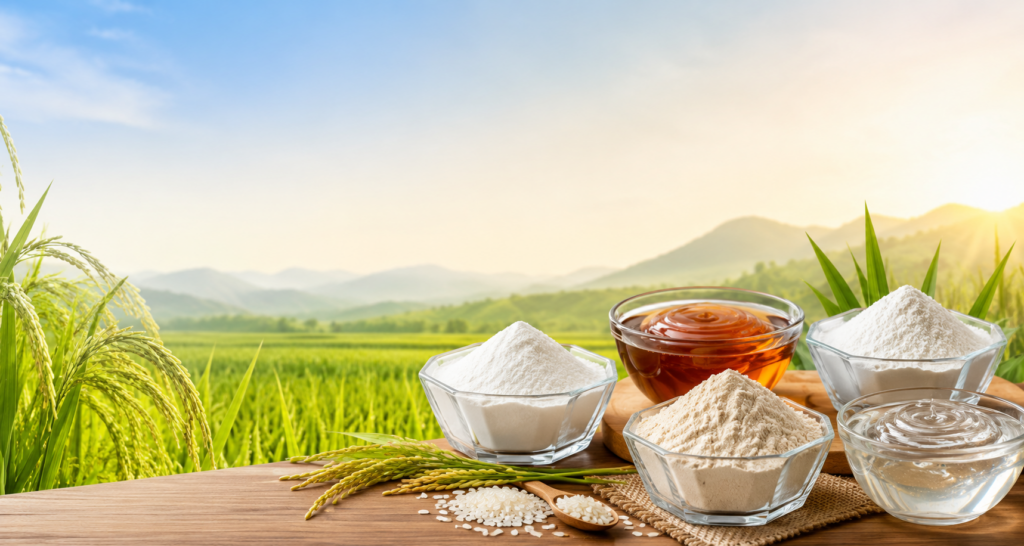
Rice-based sweeteners are important ingredients for food manufacturers seeking alternatives to conventional sweetening ingredients and solutions tailored to specific product formulations. From bakery products and cereal bars to confectionery, sauces and selected beverage applications, rice-derived syrups can contribute sweetness, solids and other functional properties depending on their composition and the requirements of the finished product.

For food manufacturers, ingredient distributors, procurement professionals and product development teams across North America, choosing the right syrup involves more than comparing sweetness. Factors such as sugar composition, colour, flavour profile, viscosity, solids content, processing conditions and end-product requirements all play an important role.

At Nectafresh Agro Foods, we specialise in rice-based food ingredients for industrial applications, including Brown Rice Syrup, Clarified Rice Syrup and High Maltose Syrup. Available product specifications, grade options and suitability should be evaluated according to the requirements of each application.

In this guide, we explore the characteristics of these three rice-based sweeteners, their potential applications and the key considerations for sourcing ingredients for food manufacturing in the United States and Canada.

1. What Are Rice-Based Sweeteners?

Rice-based sweeteners are ingredients produced by processing rice-derived starch into syrups containing different proportions of carbohydrates, including glucose, maltose and other saccharides. Their exact composition depends on the raw material, processing method and degree of starch conversion.

These syrups are used in food manufacturing because they can provide sweetness and contribute to formulation characteristics such as viscosity, solids content, texture and moisture management. The extent of these effects depends on the syrup’s composition and the product in which it is used.

Compared with choosing a sweetener based on its name alone, manufacturers should evaluate the ingredient’s technical specifications and performance in their own formulations.

Three rice-based syrup categories worth considering are:

  • Brown Rice Syrup: A rice-derived syrup used as a sweetening ingredient in various food applications.
  • Clarified Rice Syrup: A rice syrup processed to reduce colour and, depending on the process, some of the characteristic flavour components.
  • High Maltose Syrup: A syrup formulated or processed to contain a relatively high proportion of maltose compared with other carbohydrate fractions.

These ingredients are not necessarily interchangeable. Their suitability depends on the target sweetness, flavour profile, texture, processing conditions and finished-product specifications.

2. Brown Rice Syrup: Applications and Benefits for Food Manufacturers

Brown Rice Syrup is a sweetening ingredient derived from rice starch. Its colour, flavour, carbohydrate profile and viscosity depend on its manufacturing process and product specification.

For food manufacturers, Brown Rice Syrup can be considered when developing products that require a rice-derived sweetener with a characteristic syrup profile.

Key applications of Brown Rice Syrup

Bakery products

Brown Rice Syrup may be evaluated in selected bakery formulations, including bars, cookies and other baked products. Its suitability depends on the desired sweetness, dough or batter characteristics, baking conditions and finished-product texture.

Cereal and snack bars

In cereal bars and snack products, syrup ingredients can help bind dry ingredients and contribute to texture. Brown Rice Syrup may be assessed for these functions through formulation trials.

Confectionery

Depending on its carbohydrate composition and functional specifications, Brown Rice Syrup can be considered in certain confectionery applications where sweetness, viscosity and texture are important.

Sauces and food preparations

Some sauce and food-preparation formulations use syrups to contribute sweetness and soluble solids. Compatibility with the product’s pH, heating conditions and desired consistency should be evaluated.

What should buyers evaluate?

When sourcing Brown Rice Syrup, food manufacturers should review:

  • Dry solids or total solids content
  • Carbohydrate profile and sugar composition
  • Colour and flavour characteristics
  • Viscosity and handling requirements
  • Microbiological and quality specifications
  • Packaging, shelf life and storage conditions
  • Availability of organic or conventional grades, where applicable

For manufacturers developing new products, a technical specification and application trial are essential to determine whether a particular syrup meets the desired performance requirements.

3. Clarified Rice Syrup: When Colour and Flavour Matter

Clarified Rice Syrup is a useful option to evaluate when a formulation requires a rice-derived sweetener with a lighter colour or a more neutral flavour profile than a less-clarified syrup.

The precise appearance, flavour, carbohydrate composition and functional characteristics vary by manufacturing process and grade. Buyers should therefore confirm these properties against the supplier’s product specification rather than relying on the product name alone.

Potential applications of Clarified Rice Syrup

Beverages and beverage preparations

In selected beverage formulations, colour and flavour can influence ingredient selection. Clarified Rice Syrup may be considered when the developer wants to assess a rice-derived sweetener for compatibility with the intended beverage profile.

Bakery and cereal products

Clarified Rice Syrup can be evaluated in bakery products, cereal bars and other formulations where the colour contribution of the sweetening ingredient is an important consideration.

Confectionery and sweet food products

Colour-sensitive confectionery and sweet preparations may benefit from evaluating syrups with different colour and flavour specifications. Final suitability depends on the recipe, processing conditions and finished-product expectations.

Food product development

For manufacturers working on new formulations, a clarified syrup may be worth comparing against other syrup options during pilot-scale testing.

Key considerations when selecting Clarified Rice Syrup

Before making a purchasing decision, compare:

  • Colour specifications and consistency between batches
  • Flavour profile
  • Carbohydrate composition
  • Solids content and viscosity
  • Compatibility with the intended manufacturing process
  • Cost-in-use and required inclusion rate
  • Documentation and quality requirements

Clarification does not automatically mean that a syrup is sugar-free, low-calorie or nutritionally superior. Product selection should be based on verified specifications and the intended formulation.

4. High Maltose Syrup: Understanding Its Role in Food Formulation

High Maltose Syrup is a syrup in which maltose represents a relatively high proportion of the carbohydrate profile. Maltose is a disaccharide composed of two glucose units.

The exact maltose content and the proportions of other carbohydrates can vary by product grade and manufacturing process. For this reason, food manufacturers should request the relevant analytical specification when evaluating High Maltose Syrup.

Its functional behaviour depends on its complete carbohydrate profile, solids content, viscosity and the conditions under which it is used.

Potential applications of High Maltose Syrup

Confectionery manufacturing

In suitable confectionery systems, syrup composition can influence sweetness, texture and crystallisation behaviour. High Maltose Syrup may be evaluated where its specific carbohydrate profile fits the product requirements.

Bakery products

Certain bakery formulations use syrups to contribute soluble solids and influence texture. High Maltose Syrup can be assessed for compatibility with the recipe and processing conditions.

Cereal bars and snack products

Manufacturers may investigate High Maltose Syrup in selected snack-bar formulations where syrup functionality, handling and finished-product texture are important.

Other processed food applications

The syrup may also be considered in other food systems where the ingredient’s verified specifications match the technical requirements. Suitability should be confirmed through laboratory or pilot-scale trials.

What makes specification review important?

For High Maltose Syrup, buyers should pay particular attention to:

  • Maltose content and overall carbohydrate profile
  • Dry solids content
  • Viscosity and handling characteristics
  • Colour and flavour
  • Crystallisation behaviour in the intended formulation
  • Processing temperature and storage conditions
  • Batch-to-batch consistency

A syrup’s maltose content alone does not determine its performance in every formulation. The full carbohydrate profile and application conditions must be considered together.

5. Brown Rice Syrup vs. Clarified Rice Syrup vs. High Maltose Syrup

Although all three are rice-based syrup ingredients, they are selected for different formulation considerations.

Selection factorBrown Rice SyrupClarified Rice SyrupHigh Maltose Syrup
Main considerationGeneral sweetening and syrup functionalityColour and flavour profileMaltose-rich carbohydrate composition
ColourDepends on grade and processingTypically processed for reduced colourDepends on grade and processing
FlavourMay retain characteristic rice-derived syrup notesMay have a more neutral profileDepends on grade and composition
Key technical reviewSolids, viscosity and carbohydrate profileColour, flavour, solids and viscosityMaltose content, solids and carbohydrate profile
Selection approachMatch the syrup to the recipe and target textureEvaluate where colour or flavour is importantEvaluate where the maltose profile fits the formulation

6. Organic vs. Conventional Rice Syrup: What North American Buyers Should Know

Food manufacturers and ingredient distributors may need organic or conventional rice syrup depending on their product positioning, sourcing policies and certification requirements.

Organic rice syrup

Organic rice syrup may be suitable for products developed under organic certification programmes, provided the ingredient and its production meet the applicable requirements.

Buyers should confirm the validity and scope of the supplier’s organic certification, the product’s eligibility for the intended market, and the documentation required by their certification body or importer.

Conventional rice syrup

Conventional rice syrup can be considered for applications where organic certification is not required. Its suitability should be assessed using the same technical criteria applied to other syrup ingredients.

Questions to ask your supplier

When purchasing rice syrup for the US or Canadian market, consider asking:

  1. Is the specific product available in an organic grade, a conventional grade or both?
  2. Which certifications apply to the exact product and manufacturing facility?
  3. Can the supplier provide a current technical data sheet and Certificate of Analysis?
  4. Are traceability, lot identification and relevant food safety documents available?
  5. Can the supplier support the documentation requirements of the importer and intended market?

Organic status, non-GMO status, gluten-free status and other claims should be verified individually. One certification or claim does not automatically establish another.

7. How to Choose the Right Rice-Based Sweetener for Your Application

The most suitable syrup depends on the product you are developing and the role the ingredient needs to perform.

Step 1: Define your formulation requirements

Identify your target sweetness, desired colour, flavour profile, texture, solids content and processing conditions.

Step 2: Compare technical specifications

Request product data sheets for the syrup grades under consideration. Review the carbohydrate profile, solids, viscosity and other relevant analytical parameters.

Step 3: Conduct application trials

Test the syrup in the actual recipe or a representative pilot formulation. Assess processing behaviour, finished-product characteristics and stability under the intended storage conditions.

Step 4: Evaluate supply and quality requirements

Consider production capacity, packaging, shelf life, lead times, export documentation and batch consistency. Your supplier should be able to explain the quality controls and documentation available for the selected ingredient.

Step 5: Confirm regulatory and labelling requirements

For products sold in the United States or Canada, review applicable ingredient declarations, nutrition labelling and marketing claims with your regulatory team.

For example, the US FDA includes sugars from syrups within its added-sugars framework, while Canadian rules include requirements for grouping certain sugars-based ingredients in ingredient lists. Requirements depend on the product and its formulation. Review the applicable guidance before finalising the label.

8. Sourcing Rice-Based Sweeteners for the USA and Canada

For North American food manufacturers, ingredient sourcing involves both technical suitability and supplier reliability.

A supplier evaluation should consider more than the initial purchase price. Product consistency, quality documentation, packaging, transport requirements, lead times and communication can all influence the overall sourcing decision.

Before placing a bulk order, buyers should consider requesting:

  • Technical Data Sheet (TDS)
  • Certificate of Analysis (COA) for the relevant lot or representative product
  • Applicable food safety and quality documentation
  • Organic certification documentation, where relevant
  • Packaging and storage information
  • Export and shipment documentation, as applicable
  • Samples for evaluation, where available

Importers should also verify applicable US or Canadian requirements for the specific ingredient and shipment.

Working with a manufacturer that understands the technical requirements of food ingredients can help procurement and product development teams assess suitability more efficiently.

9. Explore Rice-Based Ingredients from Nectafresh Agro Foods

At Nectafresh Agro Foods, we supply rice-based food ingredients for industrial and commercial applications.

Our product range includes Brown Rice Syrup, Clarified Rice Syrup and High Maltose Syrup, alongside other rice-based ingredients such as Rice Syrup Solids and Rice Protein.

We work with food ingredient buyers seeking suitable ingredients for their formulation and sourcing requirements. Product availability, specifications and grade options should be confirmed for each enquiry.

Whether you are developing a new food product, reviewing your existing ingredient portfolio or evaluating suppliers for the North American market, our team can help you identify the relevant product information for your application.

Looking for a rice-based sweetener for your next formulation?

Contact Nectafresh Agro Foods to enquire about product specifications, applicable grades, samples and bulk supply options.

Explore our products:

Request a Quote or Product Information

Share your application, target specifications, required grade and estimated volume with our team to help us respond to your ingredient enquiry.

Conclusion

Brown Rice Syrup, Clarified Rice Syrup and High Maltose Syrup offer food manufacturers different options for formulating products with rice-derived sweetening ingredients.

Brown Rice Syrup can be evaluated for general sweetening and syrup functionality, Clarified Rice Syrup may be considered where colour and flavour are important, and High Maltose Syrup is worth assessing when a particular maltose-rich carbohydrate profile is required.

For food manufacturers and ingredient buyers across the USA and Canada, the best choice depends on the complete product specification, formulation requirements, quality documentation and intended application.

Nectafresh Agro Foods is ready to support your ingredient evaluation. Contact our team (info@nectafresh.com) to discuss rice-based sweeteners and find a suitable product for your manufacturing requirements.

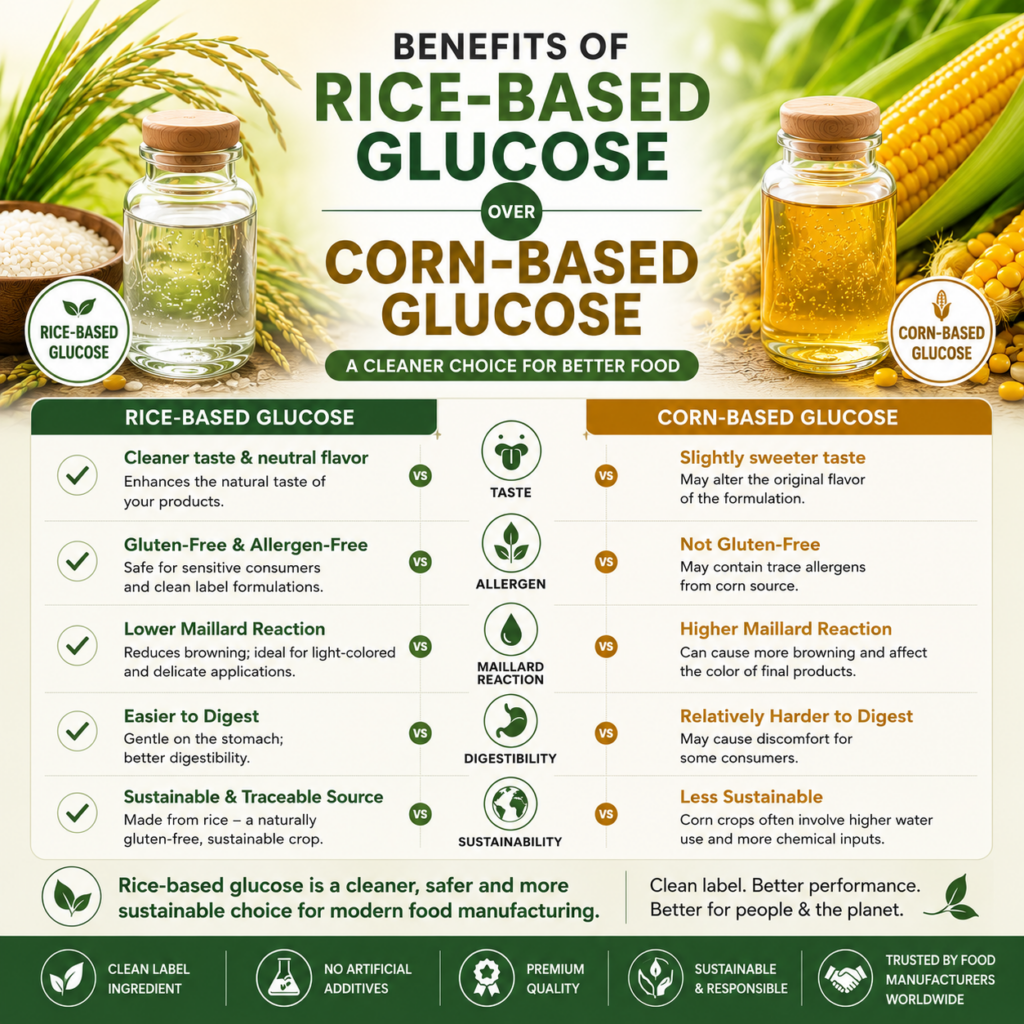
Benefits of Rice-Based Glucose Over Corn-Based Glucose

As food manufacturers continue to seek cleaner, more versatile ingredients, rice-based glucose syrup has emerged as a preferred alternative to conventional corn-based glucose syrup in many applications. Its functional performance, neutral taste, and broad consumer acceptance make it an excellent choice across a wide range of food industries.

1. Cleaner & More Neutral Flavor

Rice-based glucose syrup has a naturally mild and clean taste that does not interfere with the original flavor profile of the finished product. This makes it especially suitable for products where delicate flavors need to be preserved, including beverages, dairy products, bakery items, confectionery, and nutritional formulations.

2. Naturally Gluten-Free & Allergen-Friendly

Rice is naturally gluten-free and is not among the major food allergens. Rice-based glucose syrup is therefore an excellent ingredient for manufacturers developing products for gluten-free, allergen-conscious, or special dietary markets.

3. Excellent Processing Stability

Rice-derived glucose syrup offers reliable performance during food processing. Its functional properties provide excellent heat stability, making it suitable for applications involving baking, confectionery, sauces, syrups, and other high-temperature manufacturing processes.

4. Versatile Across Multiple Food Applications

Rice-based glucose syrup performs effectively in a wide range of applications, including:

  • Bakery Products
  • Confectionery
  • Dairy & Frozen Desserts
  • Beverages
  • Nutritional Products
  • Sauces & Dressings
  • Pharmaceutical Preparations

Its versatility allows manufacturers to use a single ingredient across multiple product categories.

5. Improved Texture & Mouthfeel

Rice-based glucose syrup enhances the sensory characteristics of finished products by contributing to:

  • Smooth texture
  • Pleasant mouthfeel
  • Controlled viscosity
  • Improved moisture retention
  • Better chewiness in confectionery
  • Enhanced creaminess in dairy applications

These functional benefits help improve overall product quality and consumer satisfaction.

6. Competitive & Cost-Effective Solution

Rice offers a high starch yield, enabling efficient production of glucose syrup. Depending on sourcing and market conditions, rice-based glucose syrup can provide a competitive and cost-effective alternative while delivering excellent functional performance.

7. Supports Clean-Label Product Development

With increasing consumer preference for recognizable and plant-based ingredients, rice-based glucose syrup aligns well with clean-label product strategies and helps manufacturers meet evolving market demands.

Why Choose Rice-Based Glucose Syrup?

Rice-based glucose syrup combines excellent functionality with a neutral taste, broad application versatility, and consumer-friendly attributes. It enables manufacturers to improve product quality while addressing modern market trends such as gluten-free formulations, clean-label development, and premium food innovation.

Nectafresh Agro Foods supplies premium-quality Rice-Based Glucose Syrup in multiple specifications to meet the requirements of bakery, confectionery, dairy, beverage, pharmaceutical, and food manufacturing industries worldwide.

Why Choose Nectafresh Rice-Based Glucose Syrup?

Premium Rice-Based Sweetening Solution for Modern Food Manufacturers

As consumer demand shifts toward cleaner, high-quality ingredients, food manufacturers need sweetening solutions that deliver consistent performance without compromising product quality. Nectafresh Rice-Based Glucose Syrup is developed to meet these expectations, offering excellent functionality across a wide range of food and beverage applications.

Nectafresh Rice-Based Glucose Syrup supports excellent processing performance by contributing to improved texture, smooth mouthfeel, controlled viscosity, and enhanced moisture retention.

Manufactured from premium-quality rice, our glucose syrup features a clean, neutral flavor that allows the natural taste of finished products to shine. It is naturally gluten-free, free from major allergens, and available in both Organic and Conventional grades, making it suitable for diverse product formulations and evolving market needs.

It also offers excellent clarity, color stability, and reliable freeze–thaw performance, making it ideal for bakery, confectionery, dairy, beverages, frozen desserts, nutritional products, sauces, and pharmaceutical applications.

To meet different manufacturing requirements, our syrup is available in multiple DE (Dextrose Equivalent) grades and viscosity profiles, providing greater formulation flexibility and consistent batch-to-batch quality. We also manufacture SO₂-free grades where specified, supporting cleaner ingredient declarations and premium product positioning.

At Nectafresh Agro Foods, we are committed to delivering export-quality rice-based ingredients that meet international standards for safety, consistency, and performance. Whether you’re developing clean-label products or improving existing formulations, Nectafresh Rice-Based Glucose Syrup offers the quality and reliability needed to create exceptional food products.

Choose Nectafresh—your trusted partner for premium rice-based sweetening solutions.

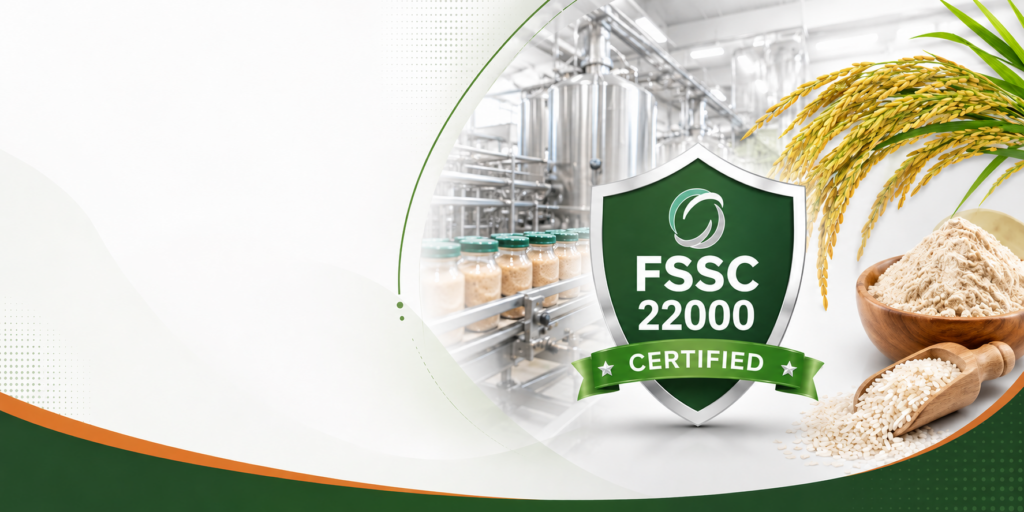
Why FSSC 22000 Certification Matters for Global Food Manufacturers

In the global food industry, quality and safety are essential for earning customer trust and meeting regulatory requirements. As food supply chains become more complex, manufacturers need a reliable food safety management system that ensures consistency, compliance, and product integrity. FSSC 22000 (Food Safety System Certification 22000) is one of the world’s most recognized food safety certifications, providing a structured framework to identify, control, and prevent food safety risks throughout the manufacturing process.

Recognized by the Global Food Safety Initiative (GFSI), FSSC 22000 is widely accepted by international retailers, food brands, and buyers. It helps manufacturers strengthen their food safety management systems, improve operational efficiency, and demonstrate compliance with globally accepted standards. Certification also enhances product consistency, supports continuous improvement, and reduces the need for multiple customer audits.

For companies supplying global markets, FSSC 22000 offers significant business advantages. It improves credibility with international customers, simplifies access to export markets, strengthens supply chain relationships, and builds confidence among distributors, retailers, and consumers. Working with certified suppliers also assures buyers that food safety controls are implemented throughout production and quality management processes.

At Nectafresh Agro Foods, quality and food safety are integral to everything we do. Our FSSC 22000-certified manufacturing facility follows stringent quality control systems to ensure every batch of our rice-based ingredients meets the highest international standards. From Rice Syrup and Rice Protein to Maltodextrin and Liquid Glucose, our products are manufactured with a strong focus on safety, consistency, and reliability.

As consumer expectations continue to evolve, partnering with an FSSC 22000-certified manufacturer provides confidence that your ingredients are produced under internationally recognized food safety practices. At Nectafresh, we are committed to delivering premium rice-based ingredient solutions that help food manufacturers develop safe, high-quality products for global markets.

Why Clean Label Ingredients Are Shaping the Future of Food Manufacturing

Consumer preferences are changing rapidly, and food manufacturers are adapting by choosing clean label ingredients that offer transparency, quality, and natural nutrition. Today’s buyers carefully examine product labels and prefer foods made with simple, recognizable ingredients instead of artificial additives and preservatives. As a result, clean label products have become an important driver of innovation across the global food industry.

Clean label ingredients are naturally sourced, minimally processed, and easy for consumers to understand. They support healthier food formulations while helping brands build trust and credibility. Products made without synthetic colors, artificial flavors, or unnecessary chemicals appeal to health-conscious consumers seeking better food choices.

The growing popularity of plant-based ingredients has further accelerated the clean label movement. Ingredients such as rice protein, rice syrup, natural sweeteners, and plant-based fibers offer excellent functionality while meeting consumer expectations for clean, nutritious products. Their versatility makes them suitable for bakery, beverages, dairy alternatives, nutritional supplements, snacks, and confectionery applications.

Organic food ingredients are also gaining momentum as consumers increasingly value sustainable farming practices and non-GMO products. Combining organic and clean label positioning allows manufacturers to create premium products that stand out in competitive markets while supporting environmental responsibility.

For food manufacturers, adopting clean label ingredients delivers multiple business advantages. Transparent ingredient lists strengthen consumer confidence, improve brand reputation, and create opportunities to enter premium retail and export markets. As global demand for healthier foods continues to rise, companies investing in clean label innovation will be better prepared for long-term growth.

At Nectafresh Agro Foods, we supply premium rice-based ingredients including rice protein, rice syrup, rice syrup solids, maltodextrin powder, liquid glucose, and high maltose syrup. Our ingredient solutions help manufacturers develop clean label, plant-based, and high-quality food products that meet evolving consumer expectations.

Looking for reliable clean label ingredient solutions? Contact Nectafresh Agro Foods today and discover how our premium rice-based ingredients can support your next food innovation.

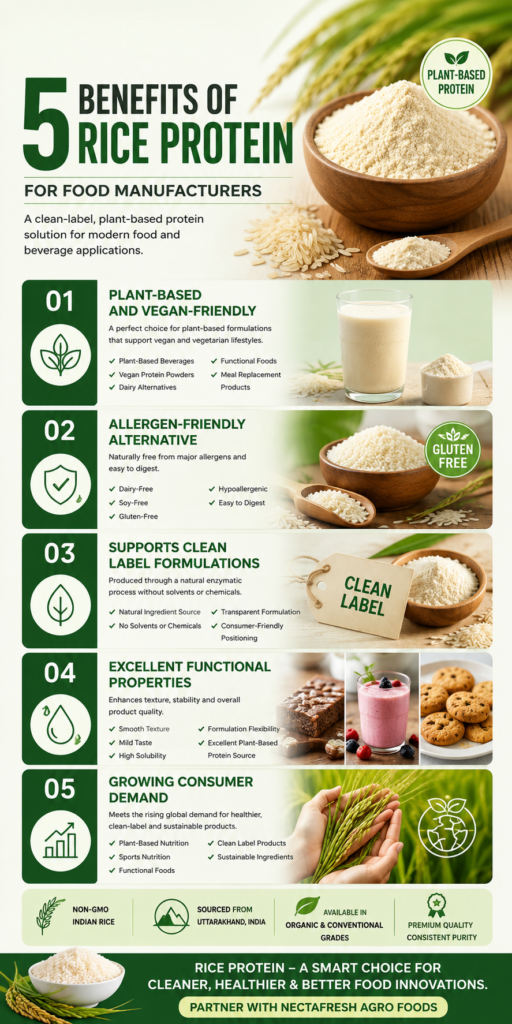
5 Benefits of Rice Protein for Food Manufacturers

As the food industry moves toward healthier and more sustainable products, rice protein has become a preferred ingredient for manufacturers worldwide. Consumers today are looking for plant-based, clean-label, and allergen-friendly foods, encouraging brands to reformulate products with high-quality protein sources that meet these expectations.

At Nectafresh Agro Foods, our Rice Protein Powder is produced from premium Non-GMO Indian rice sourced from the Himalayan region of Uttarakhand. Manufactured using a gentle enzymatic process without chemical solvents, it offers exceptional purity, functionality, and nutritional value for a wide range of food and beverage applications.

1. Ideal for Plant-Based Product Development

Rice protein is a 100% plant-based ingredient that supports the growing demand for vegan and vegetarian products. Its balanced nutritional profile makes it suitable for protein beverages, dairy alternatives, meal replacements, functional foods, and sports nutrition products, helping manufacturers cater to a rapidly expanding consumer market.

2. Naturally Allergen-Friendly

Unlike many traditional protein sources, rice protein is naturally gluten-free, dairy-free, soy-free, and easy to digest. This makes it an excellent choice for developing products for consumers with food allergies, intolerances, or specialized dietary requirements while expanding market reach.

3. Supports Clean Label Formulations

Today’s consumers carefully read ingredient labels and prefer products made with simple, recognizable ingredients. Rice protein produced through a natural enzymatic process without harsh chemicals aligns perfectly with clean-label trends. It enables manufacturers to create transparent formulations that build consumer confidence and strengthen brand reputation.

4. Excellent Functional Performance

Beyond its nutritional benefits, rice protein delivers excellent functionality in food processing. Its mild flavor, smooth texture, high solubility, and formulation flexibility improve the quality of protein powders, nutrition bars, bakery products, beverages, cereals, and meal replacement formulations without overpowering the final product’s taste.

5. Meets Growing Global Market Demand

Demand for plant-based proteins continues to increase across food, beverage, and nutritional industries. By incorporating rice protein into new product formulations, manufacturers can stay ahead of market trends while offering sustainable, high-quality nutrition that appeals to health-conscious consumers.

Why Choose Nectafresh Rice Protein?

Nectafresh Agro Foods supplies premium Rice Protein available in Organic and Conventional grades. Produced from high-quality Non-GMO Indian rice, our ingredient offers excellent functionality, clean-label appeal, and consistent quality for innovative food manufacturing. Whether you are developing protein beverages, bakery products, dairy alternatives, nutritional supplements, or functional foods, our rice protein provides a reliable solution to support your next product innovation.

Partner with Nectafresh Agro Foods for premium rice protein ingredients that help you create cleaner, healthier, and market-ready food products.

error: Content is protected !!