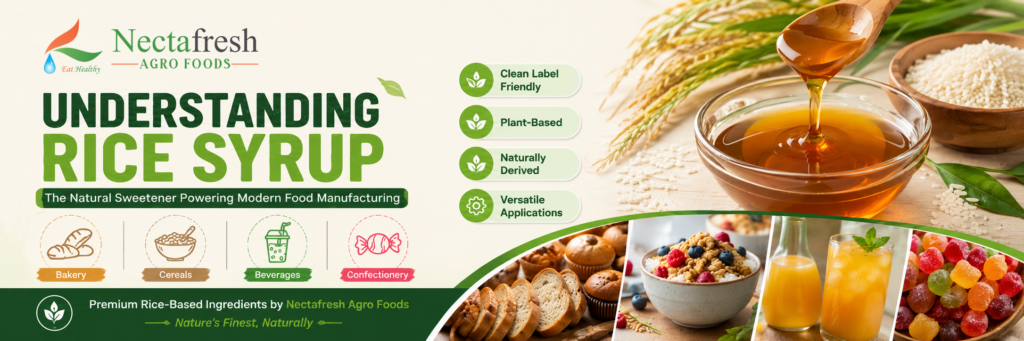
As consumer preferences shift toward natural sweeteners and clean-label ingredients, rice syrup has emerged as a valuable ingredient across the food and beverage industry. Known for its mild sweetness, smooth texture, and versatile functionality, rice syrup is widely used by manufacturers looking to improve product quality while meeting modern consumer expectations.
From bakery products to beverages and confectionery applications, rice syrup offers a reliable and effective solution for a wide range of food formulations.
What Is Rice Syrup?
Rice syrup, also known as rice malt syrup, is a natural sweetener produced by breaking down rice starch into simpler sugars through enzymatic processing. The result is a thick, amber-colored liquid with a mild, pleasant sweetness and excellent binding properties.
Rice syrup is valued for its:
- Smooth texture
- Mild flavor profile
- Natural sweetness
- Excellent moisture retention
- Clean-label appeal
- Plant-based origin
These characteristics make it a preferred ingredient in many food manufacturing applications.
Why Food Manufacturers Choose Rice Syrup
Rice syrup provides more than just sweetness. It offers several functional benefits that help improve product quality and processing efficiency.
Consistent Texture
Rice syrup contributes to smooth textures and improved mouthfeel in finished products.
Moisture Management
It helps retain moisture, extending freshness and shelf life in baked goods and cereals.
Natural Sweetening
Manufacturers can reduce reliance on refined sugars while maintaining desirable taste profiles.
Clean Label Compatibility
Rice syrup aligns well with growing consumer demand for recognizable and naturally derived ingredients.
Plant-Based Formulation
As a rice-derived ingredient, it supports vegan, vegetarian, and plant-based product development.
Industrial Applications of Rice Syrup
1. Bakery Applications
The bakery industry extensively uses rice syrup for its sweetening and functional properties.
Rice syrup helps:
- Improve softness and texture
- Enhance moisture retention
- Extend product freshness
- Improve browning during baking
- Maintain product consistency
Common bakery applications include:
- Bread
- Cookies
- Cakes
- Muffins
- Granola bars
- Breakfast pastries
Its mild sweetness allows manufacturers to balance flavor while achieving desired texture characteristics.
2. Cereals and Breakfast Products
Rice syrup serves as an effective binding and sweetening agent in cereal manufacturing.
Benefits include:
- Better ingredient binding
- Improved crunch retention
- Uniform coating of cereal pieces
- Enhanced shelf stability
- Controlled sweetness
Applications include:
- Breakfast cereals
- Granola
- Muesli
- Protein bars
- Nutrition bars
- Snack clusters
The ingredient’s viscosity makes it particularly effective for binding grains, nuts, and seeds together.
3. Beverage Applications
The beverage industry increasingly utilizes rice syrup as a natural sweetening solution.
Advantages include:
- Smooth sweetness profile
- Easy incorporation into formulations
- Stable performance during processing
- Clean flavor without overpowering other ingredients
Typical applications include:
- Functional beverages
- Energy drinks
- Plant-based beverages
- Nutritional drinks
- Smoothies
- Ready-to-drink products
Rice syrup helps manufacturers create naturally sweetened beverages that appeal to health-conscious consumers.
4. Confectionery Applications
Rice syrup is widely used in confectionery production because of its ability to control crystallization and improve texture.
Benefits include:
- Enhanced chewiness
- Improved product stability
- Better texture control
- Reduced sugar crystallization
- Attractive gloss and appearance
Common confectionery applications include:
- Gummies
- Chewy candies
- Caramels
- Fruit snacks
- Energy chews
- Nutritional confectionery products
Its functional properties help manufacturers achieve consistent quality while maintaining product appeal.
Rice Syrup and Clean Label Innovation
The global food industry is increasingly focused on clean-label product development. Consumers are actively seeking products made with simple, recognizable ingredients and fewer artificial additives.
Rice syrup supports these trends by offering:
- Naturally derived sweetening
- Plant-based sourcing
- Consumer-friendly labeling
- Versatile formulation capabilities
As manufacturers continue developing healthier and more transparent food products, rice syrup is becoming an essential ingredient in modern formulations.
The Future of Rice Syrup in Food Manufacturing
The demand for natural sweeteners and clean-label ingredients is expected to continue growing across global markets. Rice syrup offers an ideal balance of functionality, sweetness, and consumer appeal, making it a valuable ingredient for future-focused food manufacturers.
Whether used in bakery products, cereals, beverages, or confectionery applications, rice syrup provides reliable performance while helping brands meet evolving market demands.
Looking for High-Quality Rice Syrup Solutions?
At Nectafresh Agro Foods, we provide premium-quality rice syrup solutions designed to meet the needs of modern food manufacturers. Our products deliver consistent quality, functionality, and clean-label appeal across a wide range of industrial applications.